Monday, April 26, 2010

Harvick Wins at Dega


It's been a long time coming,...so excuse me
while I enjoy this win.. Kevin Harvick executed the perfect last- lap pass on Sunday to win the Aaron's 499 NASCAR race at Talladega, Alabama.. The win snapped a streak of 114 races since Harvick has won a points race in the NASCAR Sprint Cup Series. It was the longest Talladega race in history as the new three attempts at a green, white, checkered finished was imposed. Sundays race went 12 laps past the 188 scheduled lap race as wrecks and caution flags delayed the finish. Ironically, it was this same rule that cost Harvick the Daytona 500 earlier this year. That day his car would not come up to speed fast enough after a late caution flag and he finished third. Yesterday the 2007 Daytona 500 winner ran most of the race in the rear of the pack, but with 60 laps to go he made his way to the front. With 5 laps to go he was pushing leader Jamie McMurry to the head of the pack. On the final turn Harvick used the sling-shot move to push his way past McMurry, who would finish second. The margin of victory was 0.011 seconds,..or half a front fender. This was the conclusion of a week that saw his primary sponser, Shell Pennzoil, announce they would be leaving at the end of this season to go over to Penske Racing Team in 2011. Shell Pennzoil was on Harvick's car for the first time when he won the Daytona 500 in 2007. It was the first Talladega win for car owner Richard Childress since 2000 when Dale Earnhardt won. It would be the final win of the Intimidator's career. The Sprint Cup regulars move on to Richmond for next weeks Saturday night race under the lights.

Saturday, April 24, 2010

Harley Davidson Motorcycles (short story version)


It should come as no surprise when I tell
you that Harley Davidson is the most successful
motorcycle company in the world. It was the dream
of four people in 1901. William Harley, Arthur Davidson,
Walter Davidson, and William Davidson wanted to
make a motorized bike. At first it was for fun, but then it
turned into a business that is recognized world wide today.
Their first bike was powered by a 7 horsepower engine
that would not even make it up a nearby hill in their
Milwaukee, Wisconsin neighborhood. Others would have
imported an engine from a reputable company,..but not
these four dreamers. By 1903 they had come up with a
25 cubic inch engine and a new loop frame pattern that
took it completely out of the motorized bicycle catagory.
This was a frame design that was revolutionary and had
a similar look to the one designed by Merkel Motors. It
would be a design that EVERY motorcycle company in the
world would follow. There was a little problem with keeping
the engine cool,..but a nearby friend named Ollie Evinrude
helped them with that minor setback. Evinrude would later
become a pioneer in the outboard motor business. By 1905
Harley Davidson had sold a dozen motorcycles. This gave
them the confidence to build a new plant in 1909... a 40 X 60 wooden structure
located on Juneau Avenue in Milwaukee. That same year HD
sold 50 motorcycles. In 1913 Harley-Davidson had a new red
brick plant on Juneau Avenue that was five stories high and
covered two blocks in length. Record sales of the Harley-
Davidson motorcycle in 1914 saw production numbers of
16,284 units. World War I was brewing in Europe and Harley-
Davidson went to the United States Government before we
were even involved and offered 15,000 motorcycles for the
Army and Marines. When the war ended Harley Davidson was
right back in the fast lane. By 1920 they were the largest
motorcycle manufacturer in the world, and their bikes were
being sold in 67 different countries. 28,189 bikes were sold in
1920 and it was if the war never happened. Harley Davidson
was at the tip of the sword all through the 1920's with leading
innovations in motorcycling. They were first to develop a 74
cubic inch (1200 cc) V-Twin engine.. first to offer a teardrop
gas tank..and the first to have a brake for the front wheel.
1929 saw Harley Davidson come out with a 45 cubic inch engine
in a flat head design just to compete with the Indian Scout and
Excelsior Super X bikes on the race tracks around the country.
The Great Depression was hard on all motorcycle companies, and
Harley Davidson was no different. Sales in 1929 of 21,000 bikes
fell to just 3,703 in 1933. A three-wheel Servi-Car was introduced
in 1934 and was an instant hit with police departments, post office
carriers, utility companies, and ice cream vendors. The Servi-Car
would stay in production until 1973. In 1935 Harley Davidson
increased it's V-Twin engine to 80 cubic inches and would halt
production of it's single cylinder engine. When World War II broke
out Harley Davidson was again at the front of the line offering
their facilities to the U.S. Government. HD sold 90,000 motorcycles
to the Allies at a deeply discounted price. Harley Davidson was
voted 'E Awards' by the government in 1943 and 1945 for the
excellent production of their employees. After the war a lot of
GIs bought wartime WLA model Harley Davidsons for as little as
100 dollars as they were returned to America. Declining sales in
the 1950's and 60's led to AMF (the bowling people) buying
Harley Davidson in 1969 and they immediately looked to cut
costs in the company. Quality and performance fell off radically,
just when the Japanese bike invasion began in this country.
In 1981 the Harley Davidson Motor Company was purchased by
a group of employee/investors headed by Willie G. Davidson for
a price of 80 million dollars. Willie G put his name on the line and
guaranteed customers a bike they could be proud of. In 1984 the
Softail model again brought customers the look of the 1940's and
50's but with modern day updates. The Fatboy model was an
instant success when it came along in 1990. Even the Ford Truck
Company wanted on the bandwagon as they offered a F-150
pick-up with Harley Davidson trim. In 2006 Harley Davidson started
work on a 75 million dollar 130,000 square foot museum that would
be filled with a collection of HD bikes, a cafe, restaurant, and meeting
rooms. The museum opened for business in 2008 and is one of the
showplaces in downtown Milwaukee. To say that a Harley Davidson
is the Cadillac of motorcycles is to slight the top of the line at
General Motors. Even the sound of a Harley Davidson motorcycle
is distinctive... and this is caused by the dual fire ignition system. The
firing sequence time between number one and two is different from
the time between number two and one again. This staggered timing
is what gives a Harley Davidson it's potato-potato sound. In 1994
Harley Davidson filed a trademark application with the United States
Patient Office to make the sound of a Harley Davidson unique and
original from others.

Editor's Note: Okay I admit to being a little bias in this report. I have had
my share of Harley Davidson motorcycles and everyone of them has a
spot in my heart. I have one in the garage at the present time, while my
pick-up truck sits in the driveway subjected to the elements of the weather. I
have had motorcycles since I was 14 and as I look ahead to my 68th birthday
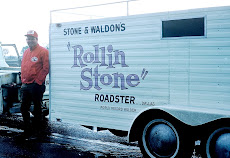
I can't imagine riding anything else. That's me on the Blue Road Glide
Harley Davidson.....

Friday, April 23, 2010

Real American Hero........


The term 'Hero' is applied very loosely these days. Everything from TV actors to low budget politicians are being hailed as heroes at the drop of a hat.
Today's blog is of a real HERO of America... Robin
Olds was born in 1922 in Honolulu, Hawaii. His father
was General Robert Olds. After moving from base to
base as a military brat, Olds knew no other life than that
of a pilot. He attended West Point and even played
on the academy football team. Commissioned as a Second
Lieutenant in 1943, he was sent to the European theater of
World War II. Flying P-38 and P-51 aircraft, the young officer
immediately showed a no-fear aggressiveness for flying. Olds
recorded 12 confirmed kills during the remainder of the war.
On one such mission, Olds and his wingman jumped a flight
of German Messerschmidts numbering over 40. Olds shot down
three and his wingman another two. During Vietnam, Olds was
once again summoned into action. He commanded a squadron
of F-4 Phantoms based out of Thailand. Olds devised a plan where
his 'Wolfpack squadron' would fool the North Vietnamese into
believing their Phantoms were slower and heavier F-105 Thunderchief
aircraft. When the enemy Migs showed up over the skies of
Vietnam, Olds' Phantoms jumped them and sent six of them down
before they scattered and headed for home. After 107 combat missions over Europe and another 152 in Vietnam, Olds was brought home to
command the Air Force Academy at Colorado Springs. General Robin Olds was a 'lead from the front' and 'get the job done' type of officer. He
died June 14, 2007, having served in three wars and as a 'triple ace' with
16 confirmed kills of enemy aircraft. Rest In Peace Robin !!

(Editor's Note) I first met Robin Olds at a Vietnam Veterans Reunion
back in the early 1990's. I approached him about reviewing my book about
my time in Vietnam. He enthusiastically agreed! His emails were always a
delight for me. His critiques were sometimes good,..and sometimes harsh..
but always very complimentary to me personally. Always in demand for his speaking prowess, he would email me from all over the country and once
from Europe. The world is the worse for the loss of Robin Olds.

Tuesday, April 20, 2010

Battle of San Jacinto (Texas Independence)


Everyone knows the story of the Alamo...A
force of 185 volunteers under the command of
Colonel William Barret Travis held off the Army
of Mexican General Antonio Lopez de Santa Anna
for eleven days before falling. This happened from
February 23, 1836 to March 6, 1836. Travis was
in a hopeless situation that he was well aware of.
One of his last letters that made it out of the Alamo
is gut-wrenching to say the least.

COMMANDANCY OF THE ALAMO, BEXAR, February 24, 1836.

FELLOW-CITIZENS AND COMPATRIOTS : I am besieged by a thousand or more of the Mexicans under Santa Anna. I have sustained a continued bombardment for twenty-four hours, and have not lost a man. The enemy have demanded a surrender at discretion ; otherwise the garrison is to be put to the sword, if the place is taken. I have answered the summons with a cannon-shot, and our flag still waves proudly from the walls. I shall never surrender or retreat. Then I call on you in the name of liberty, of patriotism, and of everything dear to the American character, to come to our aid with all despatch. The enemy are receiving reinforcements daily, and will no doubt increase to three or four thousand in four or five days. Though this call may be neglected, I am determined to sustain myself as long as possible, and die like a soldier who never forgets what is due to his own honor and that of his country. Victory or death!
"W. BARRET TRAVIS, Lieutenant-Colonel commanding.
" P. S.—The Lord is on our side.

.... but Travis's forces were buying time. At the same
time Texas father's were putting together a document
that would proclaim Texas to be a 'free and independent
Republic'. After overrunning the Alamo, Santa Anna tried
to find the army of General Sam Houston to finish off the
rebels once and for all. On April 20, 1836 the two armies
met in the marshlands just southeast of the present day
city of Houston. Santa Anna's forces numbered 1,360
while Houston's army was made up of 910 volunteers.
The Mexicans were bottled up between the Buffalo Bayou,
Galveston Bay, and Lake Francisco. The conventional battles
of the day usually started early in the morning and the
forces fought all day. Sam Houston waited until 4:30 in
the afternoon of April 21st and unleashed his men. Revenge
and bitterness over the losses at the Alamo and Goliad led
to a one-sided slaughter by the Texans. In eighteen minutes
of fighting, 630 Mexicans were killed and 730 taken prisoner.
Casualties among the Texans were listed as nine killed and
thirty wounded. Santa Anna tried to escape the battlefield
dressed in the uniform of a Corporal, but was identified when
other Mexican soldiers saluted him and called him General. The
Republic of Texas had been born. Sam Houston would become
the first President of the new country, but in 1845 Texas would
become the 28th state of the United States of America. While
Texas Independence Day is officially March 2, 1836,..remember
that April 21, 1836 was the day that gave Texas her independence.

Saturday, April 17, 2010

Texoma Harley Davidson's Birthday Party


It was billed as a Birthday Bash and despite the
rainy weather, it lived up to its billing.. Today marked
the fourth birthday of Texoma Harley Davidson in
Sherman. The dealership has come a long way since
taking over the previously named 'Sherman Harley
Davidson. A new state of the art facility on highway 75,
always plenty of motorcycles to choose from, and the best
prices of any other dealer. Besides all the glistening
paint and chrome, there were other things to welcome
customers to the dealership. T-Bones of Denison had
free bar-be-que sandwiches and chips,..Adam was
on hand to sharpen any blade you might have in your
possession...Mad House Tattoos of Denison was applying some
ink at discounted prices...and Miss Selina was sewing
patches on vests & jackets. The Harley Davidson factory
truck was on hand for free demonstration rides on the
2010 models, but had to curtain the rides to Friday due
to insurance restrictions on rainy weather. They did
have a good turnout of riders on Friday to make up for
the cancellation on Saturday. Today's activities started
a little slow due to the rain, but by noon the crowd came
shopping like it was any other day. The service, parts, and
motor clothing departments did a good business...and
the dealership even sold a few bikes today.. Texoma
HD always likes to schedule a big shindig at least once
a month.. Today was the Birthday Bash..and next month
will be Safari Day. That is scheduled for May 22nd and
will have most of the stuff listed above...plus a Liger!!
That is a cross between a lion and a tiger. No telling
what that creature is going to look like,..but check back
and I will at least have a photo of it for you.....

Friday, April 16, 2010

Ariel Motorcycles


Ariel was another company that started out
making bicycles. James Starley and William
Hillman called their bicycles 'Ariel', meaning
spirit of the air.. a reference to emphasize how
light they were. The company was started in
1890, but by 1902 they decided to go the motorized
way. A Kerry two-cycle engine was adapted to
the bicycle frame, and shazaam..a motor bike.
Charles Sangster took over the company in 1905
and his first big move was to couple a three-speed
transmission to the Kerry engine. World War I
forced the plant to close up, but in 1918 Sangster's
son Jack reopened it. Under the younger Sangster
Ariel developed a four horsepower 'White & Poppe'
engine that was revolutionary at the time. Ariel
went through a couple of mergers, but Jack Sangster
remained in control. In 1930 the company introduced
it's square four engine for the first time. It was basically
two V-twin engines mated together and was the idea
of designer Edward Turner. At the onset of World War II
Ariel turned it's facilities over to the government for the
duration of the war. At the conclusion of hostilities in
England, Ariel was sold to BSA Motorcycle Company. BSA
produced the 'Huntmaster' bike which was an Ariel with a
BSA 650cc engine. The bike was very reliable and could
easily exceed 100 mph. About 50% of all Huntmaster sales
were with the sidecar attached. In the 1950's Ariel models
and most of the BSA line moved to a smaller engine and
the company took a big interest in scooter models. 1970 was
the last trace of Ariel as it showed up in a 49cc trike. An
embarrassing end to what was a great motorcycle.

Thursday, April 15, 2010

Titanic Anniversary


Today marks the 98th anniversary of the sinking
of the RMS Titanic. With all the books, movies, and TV
shows about it, maybe you didn't hear. The White Star
Liner was the biggest ship ever built when it slid down
from it's drydock at Belfast, Ireland. Three thousand workers
constructed the Titanic from 1909 to March of 1912.
In the photo of Titanic being built, check out the triple
screw propellers and the rudder. To give you some prospective, there is a man standing near the bottom of the rudder. The Titanic was 882 feet long, 92 feet across, and 175 feet tall from the keel to the top of her
funnels. There were 9 different decks and her 120 furnaces
consumed 650 tons of coal per day. The mammoth ship had
a cruising speed of 21 knots, but could reach 23 knots at top
speed. At total capacity, the Titanic could accommodate 3,547
crew and passengers, but on this maiden voyage she was
carrying 2,223. The shortcoming was the lifeboats, which
had room for only 1,178.
Titanic would make the trip from Southampton, England to
New York City on her first trip as a passenger liner. Just before midnight on the night of April 14, 1912 the massive
ship struck an iceberg and ripped a 230 foot hole in the side
of the ship. Water rushed in at the rate of 7 tons per second.
The Titanic would go to the bottom in less than three hours.
The 28 degree water means that most of the casualties that
night died of hypothermia. The "women and children first"
attitude of the day resulted in most of the male passengers
going down with the ship. Only 706 passengers survived, making
it the worse maritime disaster of all time. Among the passengers
lost in the catastrophe that night were millionaire John J. Astor,
Industrialist Benjamin Guggenheim, Macy's owner Isidor
Straus, Broadway Producer Henry Harris, and movie actress
Dorothy Gibson. Millionaire banker J.P. Morgan was scheduled
to be on the ship, but canceled out at the last minute. The last
know survivor of the Titanic was Millvina Dean, who died in May
of 2009. She was nine weeks old at the time of the sinking.
In the final moments of life, the Titanic sent out the distress call
and shot off signal flares, but the closest ship was the Cunard
Liner Carpathia, who was 58 miles away and took four hours
to reach the Titanic. Overwhelmed by the number of survivors,
the Carpathia could not take on any bodies, but other ships
arrived within days of the event and reported bodies still
floating from the aftermath.